The Excitement and the Overwhelm: Helping Your Autistic Child Ease Back Into School

A tutor's perspective on helping neurodivergent families navigate the transition back to school.
Every August, I begin hearing many of the same questions from families I work with: "How do we make the transition back to school easier?" or "What if my child struggles
all over again?"
As a licensed elementary and special education teacher, math interventionist, and tutor who specializes in supporting autistic students and students with ADHD, I've had the privilege of helping many families navigate the return to school. I'm also the parent of three neurodivergent children, so I understand both the professional and personal sides of this transition.
While every child is unique, there are patterns I see year after year that can help make the start of school feel more predictable and less overwhelming.
A quick note before we start: I'm a tutor and educator—not a behavior analyst, occupational therapist, or psychologist. The suggestions in this article come from my experience working with students and families, combined with evidence-based educational practices that support learning and school transitions. If your child receives behavioral, occupational, or therapeutic services, I encourage you to work closely with those professionals as well. Think of this article as one more tool in your family's toolbox, not a replacement for individualized professional guidance.
The start of a new school year often brings excitement. New school supplies, fresh notebooks, a backpack packed for the first day, and curiosity about new teachers and classmates can all make the beginning of the year feel special.
It can also bring some very big feelings.
When I ask my students if they're ready for school, I usually hear one of two responses.
Some eagerly tell me about their teacher, their classroom, or seeing friends again. Even after an enjoyable summer, many children are ready for the comfort of a predictable routine.
Others hesitate. They tell me school is hard. They're worried about new teachers, unfamiliar classmates, or whether they'll remember what they learned last year.
Most children actually experience both emotions at once.
Feeling excited and anxious about returning to school is completely normal.

Why Back-to-School Transitions Can Be Hard for Autistic Children
A new school year brings many changes all at once: different teachers, different classmates, different expectations, and new routines.
While every child adjusts differently, many autistic children experience these transitions more intensely because so many parts of their daily lives are changing simultaneously.
It's also important to remember that not every autistic child dislikes change or struggles with the start of school.
Some children eagerly look forward to returning to structured routines after summer break. Others need more time to adjust. Neither response is "right" or "wrong."
The goal isn't to eliminate every anxious feeling but to make the transition feel more predictable and manageable.
Routine Whiplash
Summer often brings flexibility.
Bedtimes shift later. Wake-up times become more relaxed. Meals happen whenever the day allows. Family outings are spontaneous, and daily schedules are less structured.
Then, almost overnight, school begins.
Many autistic children rely on predictable routines to reduce the mental effort required to move through their day.
Predictable schedules help decrease the number of decisions they must make and provide a sense of security.
When routines suddenly change, children often need to devote more mental energy to planning, transitioning between activities, and adapting to new expectations before academic learning even begins.
The Unknown
Last school year, your child spent months learning classroom expectations, building relationships with teachers, and becoming familiar with daily routines.
When school starts again, nearly everything changes.
There may be a new classroom, different teaching styles, unfamiliar classmates, and new social expectations.
For students entering middle school, the number of new experiences increases even more.
Uncertainty can feel exhausting because children are constantly trying to predict what will happen next. When those predictions disappear, anxiety often increases.
Executive Functioning and Cognitive Load
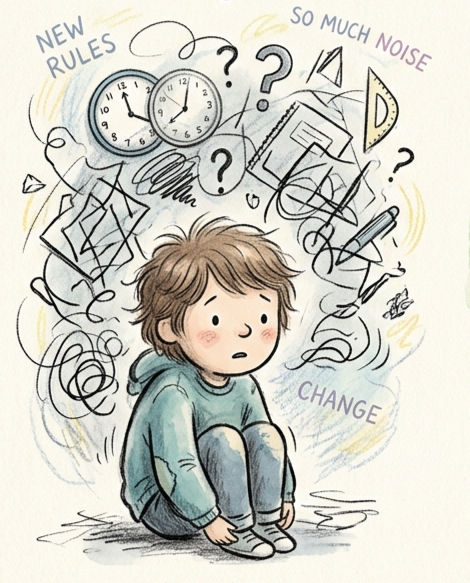
Even when children appear calm, their brains are doing an incredible amount of work throughout the school day.
Many autistic students are simultaneously managing executive functioning skills such as organizing materials, remembering multi-step directions, shifting attention between activities, planning assignments, and regulating emotions.
They are also processing sensory information from lights, sounds, movement, and conversations happening around them.
This creates a significant amount of cognitive load before academic learning even begins.
As a tutor, I often see students arrive after school completely mentally exhausted. Not because they aren't capable learners, but because they have spent hours managing the invisible demands of the school environment.
Academic Restart
Many students also worry about whether they'll remember how to "do school."
As a math interventionist, I've found that children rarely lose everything they learned over the summer.
More often, they need support retrieving information they haven't used for several weeks. Just like riding a bicycle after time away, academic skills usually come back much faster than families expect with gentle practice and encouragement.
Your Child's Feelings Are Valid
It is perfectly normal for children to feel excited and nervous about school at the same time.
School asks a lot of children academically, socially, and emotionally.
As students grow older, expectations continue to increase. Given those demands, it makes sense that some children approach a new school year with mixed emotions.
If your child doesn't want to go back to school, that doesn't mean they're lazy, defiant, or unwilling to learn. Often, they're communicating that something about the transition feels uncertain or overwhelming.
Parents, this applies to you too.
If your child is struggling with the transition, it doesn't mean you've done anything wrong. You're navigating a significant change alongside your child, and that deserves grace.
Low-Demand Ways to Help
While we can't eliminate every challenge that comes with starting school, we can make the transition feel more manageable.
Begin Adjusting Routines Early
Gradually returning to school-year bedtimes and wake-up times one or two weeks before school starts gives children's bodies and brains time to adjust. Small changes are often easier than expecting a dramatic shift the night before school begins.

Build Predictability
Predictability helps to reduce uncertainity.
Simple routines like eating dinner at consistent times, reviewing tomorrow's schedule together, using a visual calendar, or having a favorite after-school snack can create reassuring anchors throughout the day.
Give Your Child Some Control
Children are more likely to participate in routines they've helped create.
Invite your child to choose their first-day outfit, help organize school supplies, decide how to pack their backpack, or help create a morning checklist.
Offering choices builds independence while giving children a greater sense of control during a season filled with change.
Ease Back Into Learning
The old saying "use it or lose it" contains some truth, but it doesn't mean children need hours of worksheets before school starts.
As a math interventionist, I've found that brief, meaningful practice is often far more effective than lengthy review sessions.
The goal isn't to reteach an entire year's worth of learning. Instead, it's to help the brain retrieve information that hasn't been used recently.
If your child loves animals, explore interesting facts together. If they enjoy cooking, let them measure ingredients. At the grocery store, compare unit prices or estimate the total cost before checking out.
These everyday experiences naturally strengthen math, reading, problem-solving, and critical thinking skills without making learning feel like another assignment.
Remember That Good Enough Is Good Enough
Progress doesn't have to look perfect.
Celebrate effort. Notice persistence. Point out the small successes your child may overlook.
Some days will go smoothly.
Some days won't.
Both are part of the adjustment process.
Partner With Your Child's School

If your child has an IEP or a 504 Plan, consider reaching out to the school before classes begin.
A brief conversation with your child's teacher, special education case manager, or support staff can help everyone start the year with shared expectations.
Even simple communication—sharing strategies that have worked well at home or discussing potential concerns before the first day—can help reduce uncertainty for both your child and the school team.
Families, educators, and specialists each bring valuable perspectives. When everyone works together, children often experience a smoother transition.
Back-to-school season is a time of fresh starts, growing independence, and new opportunities. There will likely be moments of excitement and moments of uncertainty.
That's okay.
Children don't need perfect transitions. They need supportive adults who help make new experiences feel safe, predictable, and manageable.
Research in child development and education consistently suggests that predictable routines, opportunities for meaningful choice, and gradual transitions can reduce stress and support successful adjustment during major changes.
While every autistic child has different strengths and needs, these evidence-informed strategies align with practices commonly recommended by educators and therapists who support neurodivergent learners.
Frequently Asked Questions
Why is going back to school so hard for autistic children?
Returning to school often means adjusting to new routines, new relationships, increased executive functioning demands, unfamiliar sensory environments, and different academic expectations, all at the same time.
Many autistic children thrive with predictability, so this combination of changes can temporarily increase anxiety or emotional fatigue.
That doesn't necessarily mean the entire school year will be difficult. As routines become familiar, many children become more comfortable and confident.
How can I help my autistic child transition back to school?
Start with low-demand supports. Gradually return to school-year sleep schedules, create predictable routines, offer choices whenever possible, and ease back into learning through everyday activities your child enjoys.
The goal isn't perfection, it's helping your child feel prepared and supported.
Is it normal for my child to feel excited and anxious about school at the same time?
Yes. Many children, both autistic and neurotypical, experience excitement and worry simultaneously. Mixed emotions are a normal response to change and don't necessarily indicate that something is wrong.
Should I seek additional support if my child is struggling?
If your child's anxiety, emotional distress, or school avoidance feels significantly greater than typical adjustment challenges, consider reaching out to your child's pediatrician, psychologist, occupational therapist, behavior analyst (BCBA), or educational team.
The ideas shared in this article come from my experience as an educator and tutor and are intended to complement, not replace, individualized professional guidance.
About the Author
Alia Zundel is the founder of A to Z Learning LLC and a licensed elementary and special education teacher who specializes in helping autistic students, students with ADHD, and other neurodivergent learners build confidence in math.
With more than six years of experience in classrooms and one-on-one intervention settings, she helps students strengthen foundational math skills while supporting executive functioning, confidence, and independent learning.
As the parent of three neurodivergent children, she understands the challenges families face both professionally and personally. Her approach combines evidence-based instructional practices with practical strategies families can use at home. While she is not a behavior analyst or therapist, she works collaboratively with families to support students alongside their educational and clinical teams.
If you found this article helpful, here are a few additional resources families have found helpful:



Comments